I’m writing this blog as a bit of a prompt for myself own creative enjoyment, but also as a valid exploration of what I feel could be the real future of education.
I have already written a series of blogs and done a few videos on similar topics; homeschooling, parenting through the apocalypse, the ascension of humanity – to just quickly mention a few – and I will definitely continue in these directions the future, but in today’s quick exercise I’d really like to outline what amazing potentials I see coming around the bend in the Future.
This Future I’m referencing is of course, my own perspective and a representation of an ideal I believe will come to fruition. It will take a lot of inner, personal work in order for Humanity to get there, but I do strongly feel we will get there, some day.
I’m going to remove my critical thinking, logical self from this exercise as well, because there’s seem to be too much interference coming, in regards to the How’s, When’s and What If’s surrounding these future scenarios – and so please forgive me while I just ignore. skip right over all that and jump into the possible future when all that has happened. Please feel free to join me if you find yourself similarly distracted.
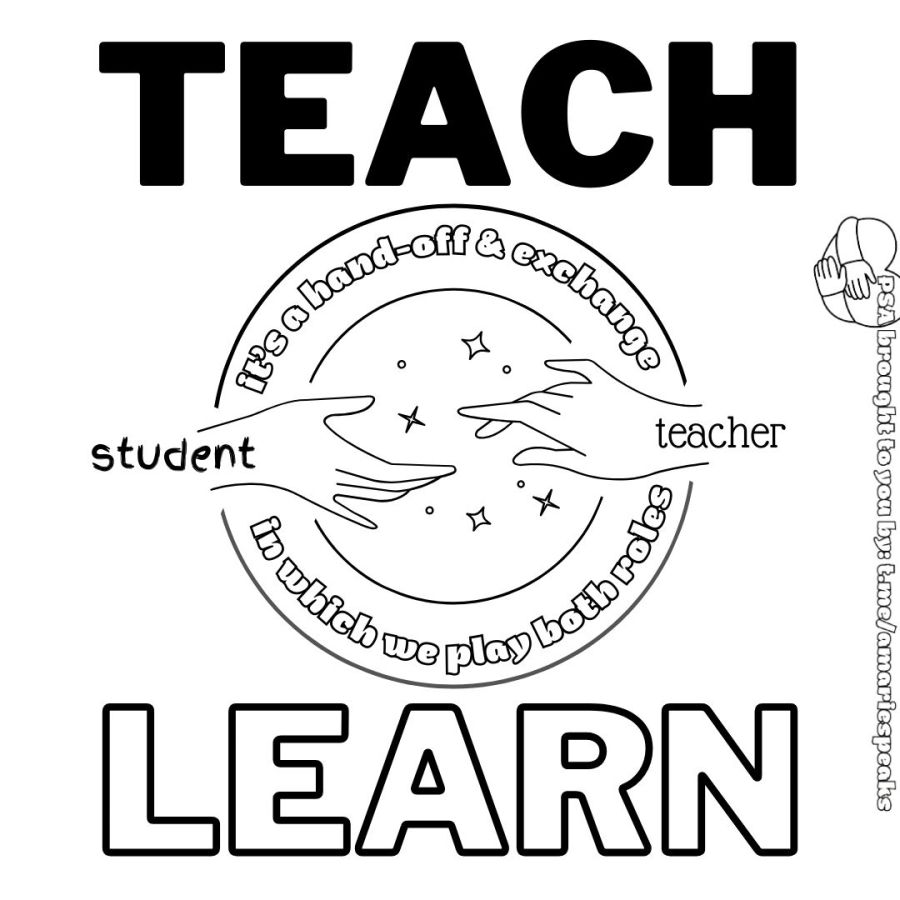
There will come a time when the Eternal Student concept will develop into a working model. This will happen when, Collectively, the bridge to higher learning and the image it currently represents – that of a linear incline and attainment of a greater degree in some black & white / cut & dry way – will cease to prove useful, (this has already happened in fact). After accepting the sleight of hand trick for what it is, we will shift into a better understanding of what Learning truly means. This change will be like linking those two opposing ends of the bridge to Higher Knowledge model to create a circle or never ending cycle of teach/learning.
This uniting intention creates an equal footing and a level ground for learning and teaching to take place upon. Teachers honoring and upholding the sovereignty of the students will further teach the instructors deeper, stronger methods of communication, empathy and humility which they can apply individually and in great dexterity to refine their teaching skills. This is how a student teaches the teacher, without even trying or knowing fully what they are doing. Teach/learning is an intimate and unique experience, when both parties take responsibility for their energetic intentions all throughout the process.
This type of rearrangement in communication style and perceived authority structures will be monumental in the world of schooling – especially “public” schools. The current models are not even capable of the redirections that would be needed to align them towards the Eternal Student model. The suggested improvements would be countered and denied by the established system, because it is Negatively oriented and therefore designed to preserve negativity, stagnation, restriction and enslavement. It would not go against its own laws of energy conservation and risk its ‘survival’ to try out positively aligned processes.
But, as promised, I am not going to be deterred by these kinds of issues – instead let me trudge on, in full faith that We will get there one day.
At the point when the Eternal Student model is accepted as the normal stance and teach/learning is recognized as a viable and worthy interaction, then we will see new types of learning environments becoming available.
The first difference, and most fundamental building block of the new learning models will be the shift of focus onto the individual student’s needs and desires. Long gone will be the days of text book curriculum, where “facts” are stored and all students must absorb and repeat said known facts in the correct way. This in itself is a false perception of learning anyways, it is not true integration and adaptation – it is merely memorization and copying. There is nothing New there and learning New Things is what schooling should be all about. In the new models, it will be.
What could that look like? Well it will need to be more like a template used for personal alterations instead of an outcome to model your work against. This adjustment of focus puts the ‘curriculum’ into the hands of the student , allowing them to choose what suits their desires. The teacher’s initial role should be passive and supportive, not authoritative and interfering. In this kind of structure, the teacher, mentor or tutor holds back their massive amount of resources and knowledge to begin with and allows the student to ask, engage and request their own questions, framed from their own personal perspective & experiences. This kind of approach allows the teacher to witness and observe the student from a disentangled view, so they can use their expertise to gauge the students capabilities, knowledge base and potentials. This assessment is where the teacher’s true skills come into play, because they must use their own judgements based on the wisdom they’ve gained over time, seeing many different types of students, learning different types of material. This kind of teacher’s perspective is what the role of admissions pretends to do in the current model – but I’m sure we all know how poorly that process has worked out.
When we remove the humane and loving parts of a system, by excusing away the lack of individual care because we claim it is inevitable and due to low staffing, low budget, etc. we consent to the demeaning treatment of students and perpetuate the negative cycle we see in the world of education today.
In the future, I see a huge return to learning at home or in small local ways. There is so much potential to be explored when you start building on new ground which is centered around the student. This kind of blank slate setting would build the curriculum around the student; and not only the content but also the teaching style, structure of learning and even things like time length/speed information is covered at.
I assume learning will taking place in much more organic, natural ways as well. This means less designated, separate and sterile style learning environments and more families homeschooling or utilizing local schoolhouse type models which have a homey, close knit feeling.
When we break out of the old habits and structures there will be new solutions bubbling up to fill those spaces. Instead of seeking out standardized tests, degrees and certificates to state for us what we know, we will rely on displaying the skill set and knowledge base in practical ways, over time.
Once there is the opportunity for this kind of change, I think it will bring in a lot of unpredictable new potentials. There is no true way to identify what those things may be, until we get into those newer learning spaces and experiences; then the possibilities will present themselves harmoniously.
The biggest shifts I see will be this new way of defining learning, which leads to new way of designing learning habitats and experiences.
My ideal notion is the local schoolhouse model which could incorporate different styles like the Montessori methods, Waldorf/Steiner as well as integrating unschooling and other newer varieties of teaching which focus on a loose, less strict structure. I would love to see local schools which not only had multiple age groups together, but also integrated life skill learning into the curriculum on a regular basis. Meaning things like: having gardens/farms on site, cleaning and outdoor chore like tasks.
Once we break out of the forced directionality of the current hierarchy we will allow and encourage the children to ask curious, honest questions and to seek the true answers out for themselves. Older children who feel keen to assist others will have all the room to help younger students learn things they’ve already mastered. And the older student isn’t “wasting time” in redundancy while he/she teaches the younger one – in fact they may be learning even more about the subject by answering questions and guiding the inept one into better understandings. They also learn priceless social skills, problem solving and empathy.
If there are children who do not wish to interact in a supportive way – then allow for that! Do not shame them or force tasks or certain interactions upon them. Instead work directly with them to highlight their personal interests and find the ways in which they can assist the whole classroom/group in their own unique way.
Homeschooling with just the immediate family has already seen a huge uptick but I do see that this will continue on exponentially, until public schools become like ghost prisons and being to crumble from lack of use, lack of funding and lack of care.
When parents can take the education of the children into their own hands directly, I feel, it is the most impactful and best way to teach children, especially up through 10 or 13 years of age – depending on the child, of course. When we take full responsibility for the choice to become a parent, I see the whole family, as a unit, to be on a positive and solid path to their highest good. I say this because I’m a strong believer that our children are our most influential and important teachers. Each child has a unique way of pushing our buttons as parents. There are crucial lessons there for us, as parents. We are meant to learn those lessons, I believe. Through the frustrations and hard work, the family as a whole is alchemized and becomes stronger in ways that would otherwise not be possible. (Our intimate partnerships/marriages do this work in its own divine way, as well.)
When we take the time, day after day, to sit down with our children and speak to them, hear them, we are able to gauge so easily their individual base, their habits and styles. We have the hardest work handed right to us, because we innately already know these intricate personality traits, if we choose to look. Choice is the main power behind this new way of learning. You get to choose what information, skills and knowledge your child is exposed to, what is held back until they are ready and also what they can fly through because there are no other students who ‘don’t get it yet’.
I have seen such changes and improvements in my two sons in these last four years of homeschooling that I have huge hopes for the large scope of humanity, once the mainstream collective finally realizes how poorly the old model is serving their children and our communities.
I am going to be writing more in the future about building well rounded curriculum and basic ways to gauge where your child’s learning path is at, based off not just their age or “common core grade level” but off their actual capabilities and capacities. Breaking out of the mainstream model has been such an interesting experience, that I’m sure I’ll be writing something dedicated to the old model vs. my new model sometime in the near future, as well!
 A.MarieSpeaks